


Pressurized Emergency Shower And Eyewash Station
The Pressurized Emergency Shower and Eyewash Station combines a pressurized water tank, emergency shower, and eyewash assembly in one system. It provides emergency flushing water for industrial locations without a permanent water connection. The system includes pressure monitoring and pressure protection components. Tank capacity, working pressure, flushing flow rates, material compatibility, and required flushing duration determine the appropriate configuration for each installation.
Key Product Advantages
Independent Water Supply: The integrated tank provides a dedicated water source for designated work areas where permanent water infrastructure is unavailable. Available water capacity and operating duration should be confirmed against site requirements.
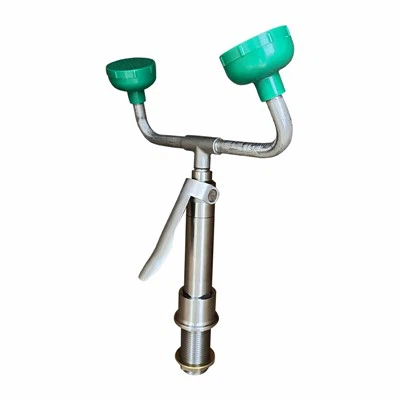
Combined Flushing Functions: The shower and eyewash assemblies provide body and eye flushing within one station. Their flow rates and operating arrangements should match the intended application and applicable emergency equipment requirements.
Pressure Monitoring: The pressure gauge allows operators to check system pressure during routine inspections. A pressure relief valve provides pressure protection in accordance with the specified system design.
Technical Specifications
|
Parameter |
Specification |
|
Product Type |
Pressurized Emergency Shower and Eyewash Station |
|
Tank Capacity |
140 L |
|
Tank Material |
304 Stainless Steel |
|
Working Pressure Range |
2.1–6.2 bar |
|
Shower Flow Rate |
76 L/min |
|
Eyewash Flow Rate |
11 L/min |
|
Valve Material |
304 Stainless Steel |
|
Pressure Gauge |
1 Unit |
|
Pressure Relief Valve |
1 Unit |
|
Activation Method |
Push Plate |
|
Water Supply |
Pressurized Tank |
Applications
Chemical Processing: Provides emergency flushing facilities in designated chemical handling areas. Material compatibility and station placement should be assessed against the substances handled and the site's emergency response plan.
Industrial Manufacturing: Supports emergency flushing requirements in production and processing areas where workers may encounter chemicals or other hazardous substances.
Laboratories and Testing Facilities: Can be specified for laboratory environments according to chemical exposure assessments, installation space, and applicable safety requirements.
Remote Worksites: The integrated tank provides an independent water supply for selected mining, construction, and industrial locations where permanent plumbing is unavailable.
Configuration and Product Selection
Tank Capacity: Determine the required capacity from the specified flushing duration, fixture flow rates, and usable water volume. Nominal tank capacity alone does not establish actual operating duration.
Pressure and Flow: Confirm that the system's working pressure supports the specified shower and eyewash flow rates. Verify performance under the intended operating conditions.
Material Compatibility: Assess tank, valve, piping, seal, and nozzle materials against the site environment. The suitability of 304 stainless steel depends on the chemical exposure and corrosion conditions.
Installation Dimensions: Confirm overall dimensions, mounting requirements, operating clearance, and drainage arrangements before finalizing the installation layout.
Customization Options
Tank and Structure: Tank capacity, dimensions, mounting arrangement, and connection positions can be reviewed against project drawings and installation requirements.
Material Selection: Stainless steel grades and compatible component materials can be evaluated according to environmental exposure and operating conditions.
Temperature Protection: Heating and insulation options can be assessed for low-temperature installations. Required ambient temperature limits and water temperature conditions should be confirmed before configuration.
Component Arrangement: Shower and eyewash layouts, activation controls, pressure monitoring, and connection details can be reviewed during technical specification confirmation.
Quality Control and Technical Documentation
Pressure and Leakage Tests: Specified tests should verify the integrity of pressure-containing components and check relevant connections for leakage.
Functional Inspection: Inspection should cover shower and eyewash activation, valve operation, water flow, pressure gauge readings, and pressure relief device operation according to the applicable test procedure.
Technical Documents: Available documents can include product specifications, dimensional drawings, operating instructions, maintenance information, and inspection records.
Compliance Verification: Applicable standards depend on the destination market and project requirements. Relevant conformity documents and test records should be confirmed before order approval.
Installation and Maintenance
Installation Position: Locate the station according to the site's hazard assessment and emergency access requirements. Keep activation controls accessible and allow sufficient operating clearance.
Filling and Pressurization: Use water that meets the applicable emergency flushing requirements. Follow the specified filling and pressurization procedures, and verify operating pressure before placing the station into service.
Routine Inspection: Check water condition, tank pressure, valves, nozzles, connections, and activation controls according to the operating manual and site inspection schedule.
Maintenance Planning: Establish procedures for cleaning, water replacement, functional testing, and component servicing based on the equipment instructions and applicable requirements.
Frequently Asked Questions
Q: Does the station require a permanent water connection?
A: The integrated tank supplies flushing water during operation. The tank must be filled and pressurized according to the specified operating procedure.
Q: Can tank capacity and dimensions be customized?
A: Available options can be reviewed according to required flushing duration, installation space, and project specifications.
Q: How is flushing duration determined?
A: Duration depends on usable water volume, actual fixture flow rates, and the operating configuration. These factors should be assessed together during technical selection.
Q: Can the station be configured for cold environments?
A: Heating and insulation options can be evaluated according to minimum ambient temperature and the required water temperature at the installation site.
Q: What technical documents are available?
A: Product specifications, dimensional drawings, operating instructions, maintenance information, and applicable inspection records can be confirmed during technical review.
Hot Tags: pressurized emergency shower and eyewash station, China pressurized emergency shower and eyewash station manufacturers, suppliers, factory, Heated Freeze-Protected Emergency Shower
You Might Also Like



Send Inquiry