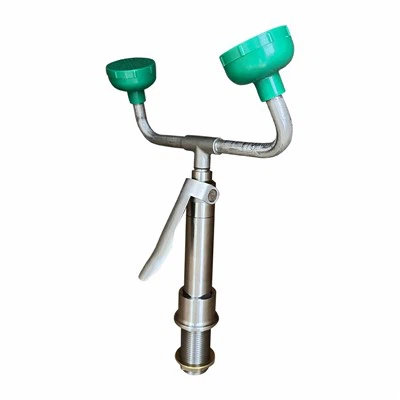
Hey there! As a supplier of portable eye wash stations, I often get asked about the training requirements for using these life - saving devices. In this blog, I'll break down everything you need to know about training for using a portable eye wash station.
Why Training is Crucial
First off, let's talk about why training is so important. A portable eye wash station is designed to provide immediate relief in case of an eye injury caused by chemicals, foreign objects, or other irritants. However, if the user doesn't know how to operate it correctly, the device might not work effectively, or it could even cause more harm.
Think about it. If someone's eyes are in pain and they're panicking, they won't be able to figure out how to use the eye wash station on the spot. Proper training ensures that employees or anyone who might need to use the station can act quickly and correctly in an emergency.


Basic Training Components
Familiarization with the Station
The first step in training is to make sure everyone knows what a portable eye wash station looks like. There are different types, like the 16 Gallon Eyewash Station, Portable Air - Pressured Emergency Eye Wash, and Portable Gravity Fed Eye Wash. Each type has its own features and operation methods.
Show the trainees where the station is located. It should be easily accessible and clearly marked. In a workplace, it's a good idea to have signs pointing to the eye wash station. Also, explain the different parts of the station, such as the activation mechanism, the nozzles, and the water supply.
Activation Procedures
Once the trainees are familiar with the station, it's time to teach them how to activate it. For air - pressured eye wash stations, they might need to pull a lever or press a button to release the water. Gravity - fed stations usually require opening a valve.
Demonstrate the activation process step by step. Let the trainees practice activating the station under supervision. Make sure they understand that they need to act quickly. In an emergency, every second counts.
Proper Eye - Washing Technique
Teaching the correct eye - washing technique is crucial. The user should hold their eyes open and position them under the nozzles. The water should flow gently but steadily over the eyes for at least 15 minutes. This helps to flush out any contaminants.
Show the trainees how to tilt their heads back slightly and keep their eyes open while the water is flowing. They should also move their eyes around to ensure that the water reaches all parts of the eye.
Maintenance and Inspection
Training isn't just about using the station; it's also about maintaining it. Teach the trainees how to check the water level, the pressure (for air - pressured stations), and the overall condition of the station regularly. They should know how to replace the water and any filters as needed.
Explain the importance of keeping the station clean and free from debris. A dirty or malfunctioning eye wash station won't be effective in an emergency.
Training Frequency
How often should the training be done? Well, it depends on the workplace environment. In high - risk industries, such as chemical manufacturing or laboratories, training should be done at least once a year. For lower - risk workplaces, once every two years might be sufficient.
However, new employees should receive training as soon as they start working. And if there are any changes to the eye wash station, such as a new model or a different activation mechanism, all employees should be retrained.
Record - Keeping
It's important to keep records of the training. This includes the names of the trainees, the date of the training, and what was covered. These records can be useful for compliance purposes and in case of an audit.
Training Methods
There are different ways to conduct the training. You can use in - person demonstrations, videos, or online courses. In - person demonstrations are great because they allow the trainees to ask questions and practice using the station. Videos can be a good supplement, especially for refresher courses. Online courses are convenient for employees who can't attend in - person training.
Encouraging a Safety - First Culture
Training is not just about teaching the technical aspects of using the eye wash station. It's also about creating a safety - first culture in the workplace. Encourage employees to report any issues with the eye wash station immediately. Make sure they know that safety is a top priority.
Contact for Purchase and Consultation
If you're interested in purchasing a portable eye wash station or need more information about our products, feel free to reach out. We're here to help you choose the right eye wash station for your needs and provide any training resources you might require.
References
- Occupational Safety and Health Administration (OSHA) guidelines on emergency eyewash and shower equipment.
- Manufacturer's instructions for portable eye wash stations.