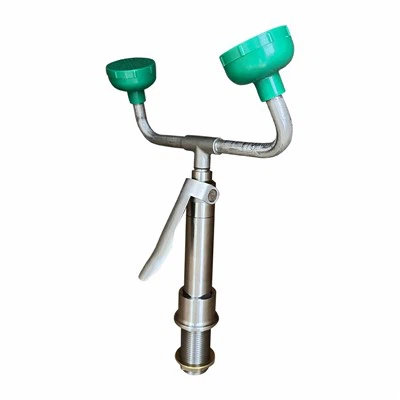
Ensuring the safety and well - being of workers in various industries is of utmost importance. Eye and face wash stations are critical emergency safety equipment designed to provide immediate flushing in case of chemical splashes or other eye and face hazards. One common question that often arises is: "Do eye face wash stations need to be connected to a drain?" As a supplier of high - quality eye face wash stations, I am here to delve into this topic and provide you with comprehensive insights.
The Function of Eye Face Wash Stations
Eye face wash stations are engineered to deliver a gentle yet effective stream of water to flush the eyes and face for a sufficient period, usually at least 15 minutes, in the event of an emergency. They come in various types, including Wall Mount Eye Face Wash, Corrosion Resistant Pedestal Eye Face Wash, and Corrosion Resistant Wall Mount Eye Face Wash. These stations are typically installed in areas where there is a risk of chemical exposure, such as laboratories, manufacturing plants, and industrial workshops.
Why a Drain Connection is Necessary
Safety and Hygiene
The primary reason for connecting an eye face wash station to a drain is to maintain a safe and hygienic environment. When an eye face wash station is activated, a large volume of water is dispensed. If there is no proper drainage, the water will pool on the floor. This standing water can create a slip - and - fall hazard, which is dangerous not only for the person using the eye face wash but also for other workers in the area. Standing water can also become contaminated with the chemicals that were being flushed from the eyes or face, potentially causing further environmental or health risks.
Chemical Disposal
In industrial settings, the water used in eye face wash stations may contain chemicals. These chemicals can be corrosive, toxic, or otherwise hazardous. Directly draining the used water into a proper sewage or containment system ensures that these chemicals are safely and correctly disposed of. This helps prevent the contamination of the workplace, as well as potential environmental pollution.
Operation Continuity
An eye face wash station that is not connected to a drain can quickly become inoperable. As the water accumulates around the station, it may seep into the equipment's components, causing corrosion or electrical damage if the station has any powered features. Connecting the station to a drain allows it to function properly during multiple emergency uses without the risk of damage from water buildup.


Regulatory Compliance
Most safety regulations and standards, such as those set by the Occupational Safety and Health Administration (OSHA) in the United States, require that eye face wash stations be connected to a drain. Failure to comply with these regulations can result in significant fines and legal consequences for employers. Additionally, proper drainage is often a requirement for insurance purposes, ensuring that the workplace meets safety standards.
Considerations for Drain Connection
Drain Capacity
When connecting an eye face wash station to a drain, it is crucial to ensure that the drain has sufficient capacity. Eye face wash stations can dispense a large volume of water in a short period. A drain that is too small may become clogged or overwhelmed, leading to water backup. It is recommended to consult a plumber or a professional in drainage systems to determine the appropriate drain size based on the flow rate of the eye face wash station.
Pipe Material
The pipes used for the drain connection should be made of materials that are resistant to the chemicals that may be present in the water. For example, if the workplace deals with highly corrosive chemicals, using PVC or stainless - steel pipes may be necessary. Choosing the right pipe material helps prevent damage to the drainage system over time.
Location of the Drain
The drain should be located close to the eye face wash station to minimize the length of the drain pipes. This reduces the risk of blockages and ensures efficient water flow. Additionally, the drain should be easily accessible for maintenance and cleaning.
Alternative Drainage Solutions
In some situations, it may not be feasible to connect an eye face wash station to a traditional plumbing drain. For example, in remote field locations or temporary work sites. In such cases, alternative drainage solutions can be considered.
Portable Containment Systems
Portable containment systems are designed to collect the water from the eye face wash station. These systems typically consist of a large container that can be easily transported and emptied. They are a practical solution for temporary or mobile workplaces. However, it is important to ensure that the collected water is disposed of properly according to local regulations.
Gravity - Fed Drainage
In some areas, gravity - fed drainage systems can be used. This involves creating a slope in the floor around the eye face wash station so that the water naturally flows to a collection point. However, this method requires careful planning and construction to ensure effective drainage and avoid water pooling.
Conclusion
In conclusion, connecting eye face wash stations to a drain is not only a matter of practicality but also a crucial safety requirement. It helps maintain a safe and hygienic workplace, ensures proper chemical disposal, and keeps the equipment in good working condition. As a supplier of eye face wash stations, we understand the importance of providing reliable and compliant products. Our Wall Mount Eye Face Wash, Corrosion Resistant Pedestal Eye Face Wash, and Corrosion Resistant Wall Mount Eye Face Wash are designed to meet the highest safety standards and can be easily integrated with proper drainage systems.
If you are in the market for high - quality eye face wash stations or need advice on drainage solutions for your workplace, we are here to help. Our team of experts can provide you with detailed product information, installation guidance, and support to ensure that your workplace is equipped with the best safety solutions. Contact us today to start a conversation about your specific requirements and how we can assist you in creating a safer work environment.
References
- Occupational Safety and Health Administration (OSHA). "Eye and Face Protection." 29 CFR 1910.133.
- American National Standards Institute (ANSI). "Z358.1 - 2014. Emergency Eyewash and Shower Equipment."